Spyder Platform
Full Matrix Portable Changeable Message Sign
Across work zones, municipal operations, and emergency environments, it supports crews with consistent operation, an integrated power system, and quick single-operator setup.
Product Overview
Function. Structure. Performance.
The Spyder Platform is organized around clear function, a strong physical framework, and operating behavior suited for demanding field environments. This approach reduces return trips, keeps work moving without interruption, and helps companies control costs across both individual projects and large fleets.
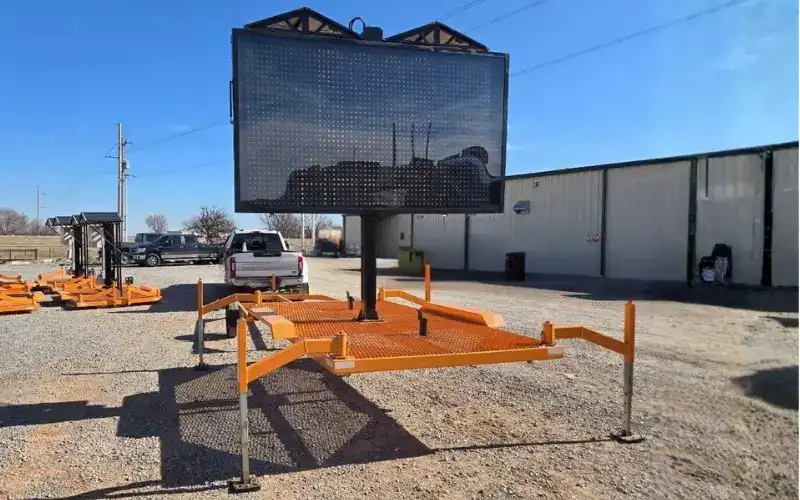
Spyder Platform
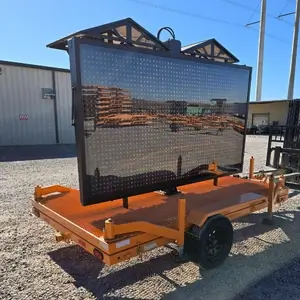
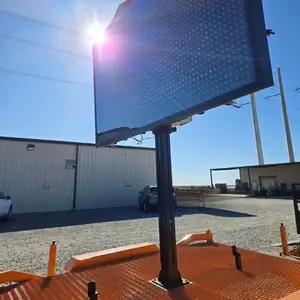
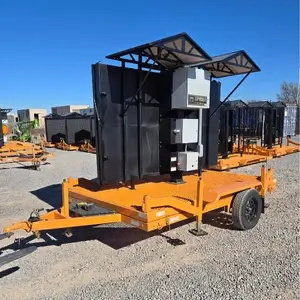

System Architecture
Engineering and field characteristics that define the Spyder Platform’s capabilities and long-term reliability.
The Spyder Platform is a full-size, full-matrix PCMS that meets MUTCD requirements.
Transport begins on the Jeep trailer. Once on-site, a crew member uses a cordless impact drill to adjust the Spyder Legs and lift the platform off the trailer. The tow vehicle moves the trailer out, the legs are leveled, and the platform is secured in position.
The mast is raised, the display is activated, and messages are updated directly at the sign—no laptop required—or through a remote interface as conditions change.
Impact: A clear, efficient setup process reduces labor, limits roadside exposure, and keeps field work moving without unnecessary steps.
The platform is built on a 3/16-inch steel frame that supports all major components. Spyder Legs serve as the rotating 29-inch jack stands, each with a 5,000-pound rating and adjusted using a cordless impact drill during setup.
Cleated footplates with metal teeth are integrated into the leg assemblies to establish firm ground engagement. The frame also incorporates steel-encased concrete weights for balanced mass distribution. Rubber footplates are available for use on concrete or asphalt.
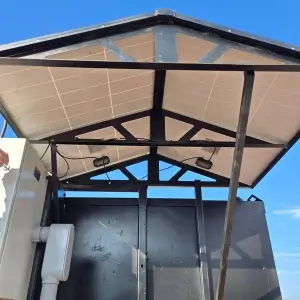
A hydraulic mast, elevated battery enclosure, and a 480W opposing tilt solar configuration, complete the physical layout, forming a durable structure suited for repeated field use.
Impact: A stronger physical build reduces wear, extends service life, and minimizes the mechanical issues that interrupt field work.
The deployed footprint measures 12 by 11 feet, giving the platform a broad base that supports firm placement once the legs are leveled. The design performs reliably on uneven ground, maintaining position on slopes up to 33 percent.
The platform has been shown to withstand speeds up to 87 mph. The mast raises the display to full height while holding its alignment, allowing the board to maintain clear, readable output throughout extended use.
These behaviors combine to support long operating windows with fewer adjustments once the platform is set and reduce the likelihood of collisions or tip-overs in demanding environments.
Impact: Performance that holds under varying field conditions reduces site interruptions, limits repositioning, and keeps message delivery consistent across varied environments.
Many companies focus on acquisition cost alone, even though the larger expenses accumulate over years of batteries, tires, sandbags, field calls, and service cycles.
The platform’s design reduces these ongoing costs by avoiding the components and processes that generate them. Long-life LiFePO₄ batteries remove the cycle of frequent replacements, and the elevated enclosure limits damage that shortens battery life. With a 480W opposing‑tilt solar configuration, the system captures more usable solar input across changing sun angles and seasons, helping maintain battery charge and runtime stability over long deployments.
With no tires to maintain, no sandbag process, and fewer external parts exposed on-site, routine upkeep drops substantially. Fewer return trips for adjustments or service also reduce labor hours, fuel use, and wear on support vehicles.
Combined, these factors lower total ownership cost and improve predictability across both individual units and larger fleets.
Impact: Reduced field intervention and fewer consumable parts create meaningful long-term savings and make fleet budgets easier to plan and manage.
Applications
The Spyder Platform Delivers
Adaptable to diverse operational demands, providing consistent message delivery for roadway projects, municipal deployments, rental programs, and planned public events.
Traffic Control
Traffic crews rely on stable, high-visibility equipment that won’t slow them down. The Spyder Platform sets quickly, locks in place on uneven ground, and delivers clear messaging through every stage of the project.
Road Construction
Deployed for paving, bridge repair, and phased lane shifts where visibility and uptime are critical. The Spyder Platform withstands harsh conditions, anchors securely on slope, and delivers uninterrupted full-matrix communication.
Municipalities
Municipal teams manage alerts, infrastructure work, and long-term deployments across varied environments. The Spyder Platform supports daily operations with fast setup, intuitive operation, and maintenance-free performance crews can rely on.
DOT & Government
Overseeing high-visibility projects where compliance, reliability, and minimal downtime are essential. The Spyder Platform ensures operational continuity with MUTCD compliance, long-term durability, and tools for coordinated fleet management.
Equipment Rental
High-turnover rentals demand simplicity, durability, and low upkeep. The Spyder Platform deploys fast, requires no routine maintenance, and eliminates parts theft—reducing service calls and extending time in the field.
Events & Venues
Deployed at concerts, festivals, and stadiums to guide traffic, manage entry points, and direct crowd movement. The Spyder Platform provides fast setup, stable footing, and clear messaging across dynamic event environments.

Technical Overview
Specifications & Details
Every aspect of the Spyder Platform is engineered for field performance—fast to deploy, easy to maintain, and designed to meet real-world demands in any environment.
5-minute deployment
Wind-resistant to 87 mph
Zero-maintenance power
MUTCD Compliant
3/16" steel frame
Model 100600

Dimensions & Deployment
-
12′ × 11′ deployed footprint
-
Max mast height: 182″
-
Transport height: 122″
-
Operates on slopes up to 33%
-
No sandbags required

Display
-
MUTCD-compliant
-
Full-matrix LED display
-
Supports text, arrows, graphics
-
High-visibility output, day or night
-
At-sign or remote message control
-
Alerts for tilt, shift, and low power

Power System
-
4 LiFePO₄ batteries
-
1212 AH total capacity
-
SOTA 4-panel solar array (480W)
-
10-year battery life (3K–6K cycles)
-
Cold-weather charging support

Structural Design
-
Hydraulic lift mast
-
29″ swing-out jack stands
-
Cleated footplates for uneven ground
-
Pre-installed internal ballast (416 lbs)
- Color: Highway Orange
- Platform w/CMS + trailer: 3,832 lbs
Included Components
Pre-wired control enclosure with local access interface
QR/Wi-Fi pairing for device connection
All required wiring harnesses, connectors, and protective enclosures
Integrated ballast (factory installed)
Hardware kit for initial setup and field service
Documentation and system reference materials
The platform supports all available connectivity tiers for local control, remote access, and fleet-level management; detailed capabilities are outlined on the Connectivity page.
Related Products
Spyder Base
Retrofit solution for damaged trailers.
The Jeep
Dedicated transport trailer for Spyder Platforms.
Spyder Legs
29″ adjustable 5000 lb swing-out jack stands.
Tarsus Footplates
Tarsus Cleated Footplates increase ground grip and resist movement.
General Information
Frequently asked questions
Can the Spyder Platform be deployed on sloped or uneven ground?
Yes. The platform supports deployment on slopes up to 33% using its swing-out Spyder Legs with 29″ extension and Tarsus Cleated Footplates.
How is the Spyder Platform transported?
The Spyder Platform is transported using the Jeep trailer, which connects directly to the platform.
The trailer is road-ready and rated for highway speeds when properly loaded.
Because of its design, a single tow vehicle can pull two Jeep trailers in tandem, each carrying its own Spyder Platform.
Can the Spyder Platform be moved by one person?
Yes. The platform is designed for single-person deployment and retrieval, using a cordless drill and socket to raise, lower, and secure the unit without additional crew.
Does the Spyder Platform require sandbags or external ballast?
No. The platform includes a permanently installed 416 lb ballast, eliminating the need for sandbags or any external weighting.
What maintenance does the Spyder Platform require?
The LiFePO₄ battery bank requires no watering, corrosion checks, or periodic replacement, and the platform has no sandbags, tires, or exposed components that normally require service.
Occasional basic mechanical tasks, such as greasing bearings, may be performed as needed.
How long will the Spyder Platform run without sunlight, and how does this compare to traditional boards?
The LiFePO₄ battery bank supports approximately 6.3 days of operation with zero solar input. Comparable traditional boards typically provide 4–6 days, depending on battery type and allowable depth of discharge.

Have Questions?
Talk With Our Team
Contact