
Redefined. Redesigned. Rebuilt.
Spyder Platform:
Next Generation Full-Matrix PCMS
The Spyder Platform PCMS is a full-size, full-matrix portable changeable message sign manufactured by INEX in El Reno, Oklahoma.
Engineered to eliminate theft, reduce collisions through safer off-road placement, and deliver zero-maintenance LiFePO4 power — built for DOTs, traffic control companies, road construction firms, and equipment rental operations.
MUTCD-compliant. 87 mph wind rating. Stable on slopes up to 33%.
Stability by Design
Safer Roadside Placement
MUTCD Compliant
5-Minute Deployment
Zero-Maintenance Power
Purpose Built Design
The Spyder Platform Difference
Explore image hotspots for feature details.
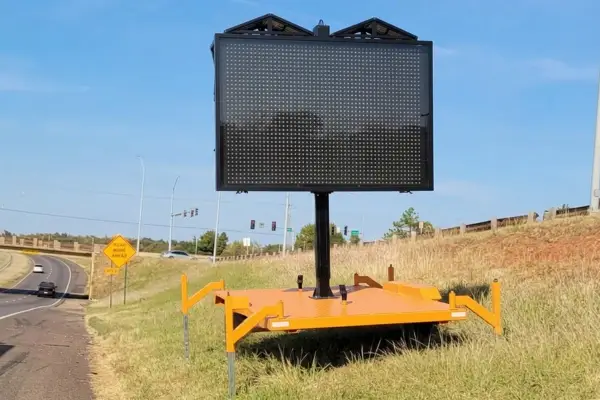
Spyder Legs —5000 lb, 29″ swing-out jack stands stabilize the platform on slopes up to 33 % grades.
Adjustable Spyder Legs maintain platform alignment on uneven ground.
Engineered with built-in ballasts for permanent stability—no sandbags required.
Patent-pending Tarsus Cleated Footplates grip uneven ground for unmatched stability.
Strength. Stability.
The Spyder Platform PCMS enables placement beyond the limits of conventional boards, reducing collisions and increasing crew safety.
Deployment:
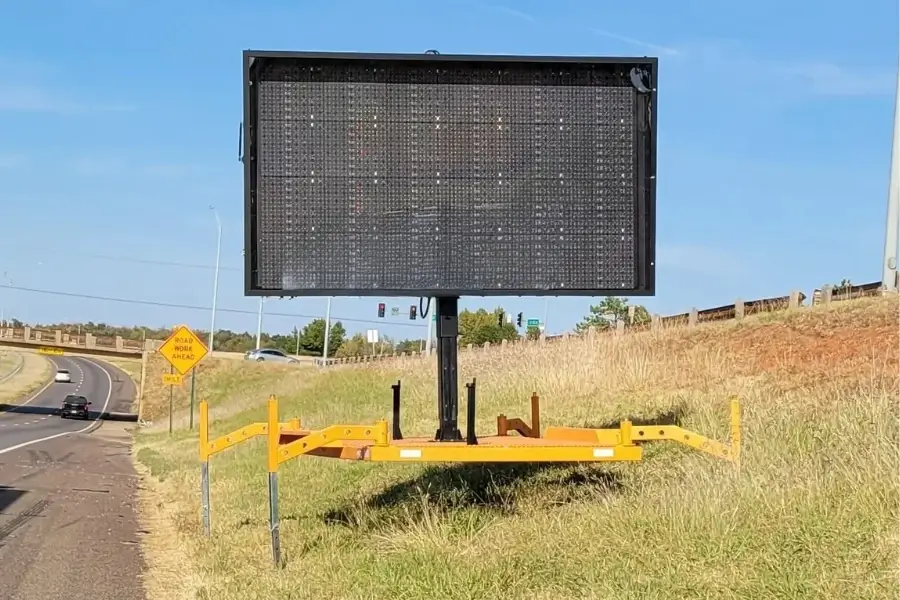
Rapid 5-10 minute. One tool. One person.
Efficient. Simple. Labor-saving.
Integrated ballast design removes the need for external sandbags.
Fast, solo deployment limits roadside exposure and improves crew safety.
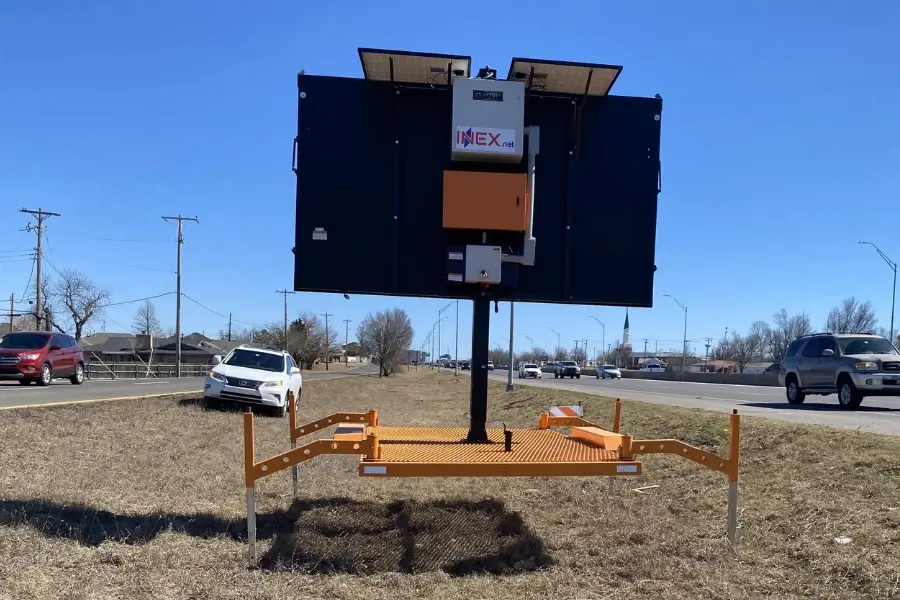
Trailer departs with tires, axles, and lights — nothing left to steal.
Batteries mounted on the top rear of the platform in a locked metal enclosure — secure and out of reach.
Hydraulic lift controller secured in a locked metal housing; removable for added protection.
Password-protected message system prevents unauthorized changes.
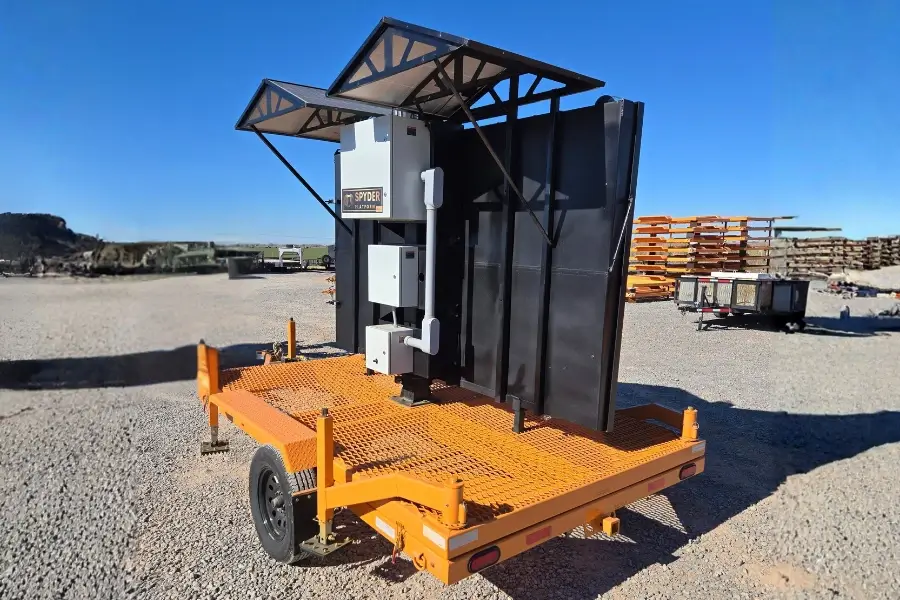
Spyder Platform’s Patent Pending Solar Opposing Tilt Array (SOTA) — fixed‑geometry, high‑efficiency opposing wings capture morning and afternoon sun, reduce the midday spike, support natural shedding from angled surfaces, and delivers continuous, maintenance‑free power with a flatter, more reliable watt‑hour curve.
Long‑life LiFePO₄ battery system delivers maintenance‑free power with no watering or corrosion and typically lasts 10–11 years, reducing required replacements.
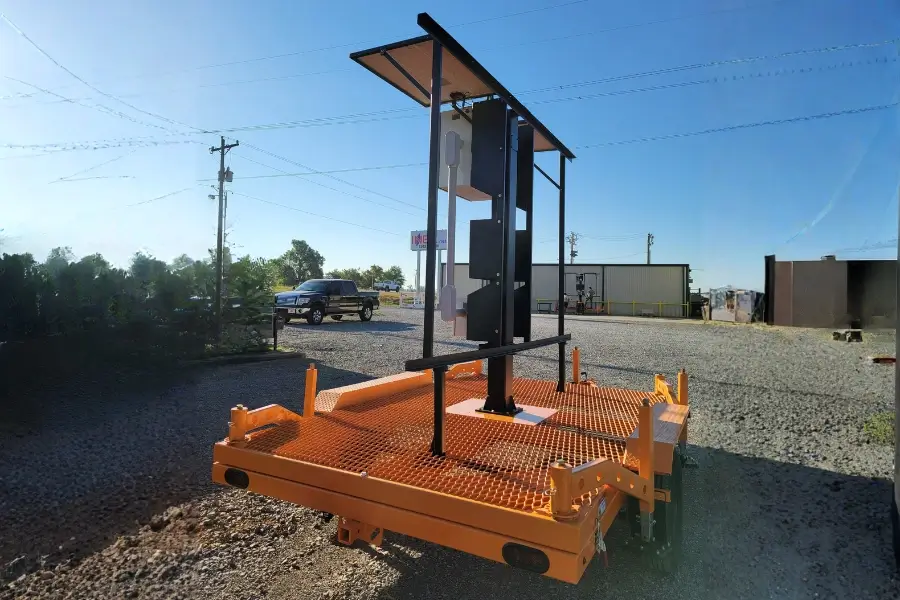
Spyder Base replaces damaged trailers — fast, cost-saving replacement for existing message or arrow boards.
Designed for broad compatibility with standard message and arrow boards—no custom fabrication required.
Accessible By Design.
Retrofit installation completed in about two hours—drastically reducing labor and equipment downtime.
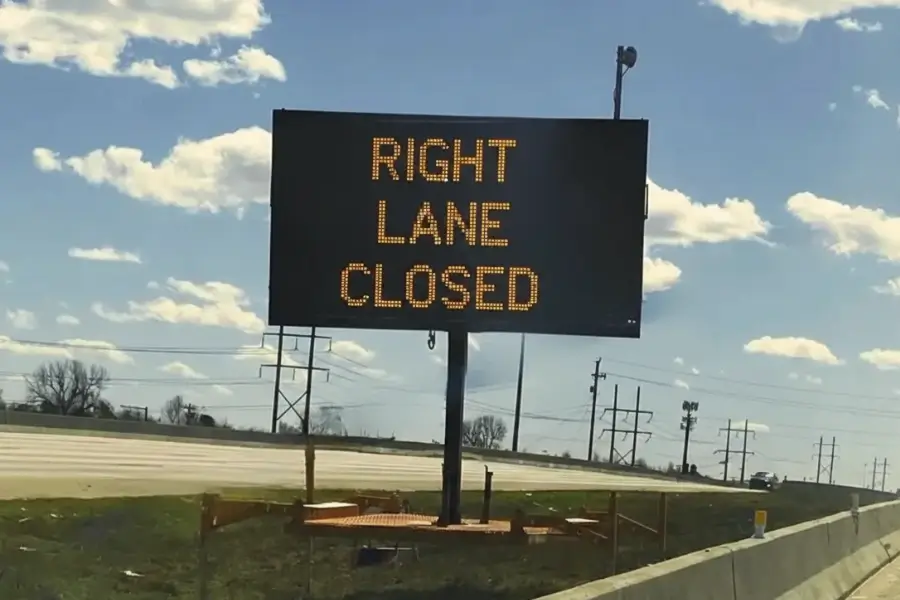
Maintenance-free systems and long component life significantly reduce total operating costs.
Intentional design removes common theft targets—no wheels, axles, or lights left behind, and batteries mounted out of reach.
5-10 minute, one person setup lowers labor expense on every deployment.
Engineered durability extends service life and delivers lasting return on investment.
In the field
Operational Savings & Safety
At INEX, we’re problem solvers. A new coat of paint and a marketing slogan doesn’t make something “new and improved.” Real improvement takes redesigning from the ground up—addressing the issues crews complain about, the costs that frustrate fleet managers, and the inefficiencies built into conventional portable message boards that financial teams keep absorbing.
We started with discovery and direct feedback from the people who use these boards every day. The result isn’t a cosmetic update; it’s a full rebuild that saves time, labor, and money while improving safety. We don’t just make equipment—we fix what’s been broken for years.
You may not realize how much conventional message boards quietly cost over time. Routine battery changes, crew hours lost to setup, tires stolen off trailers, and boards tipped by wind or traffic—all treated as normal operating expense. Those same failures also put crews and motorists at risk. They add up, job after job, year after year.
You’ve dealt with it because there was no alternative—just the same frustrations repeated from job to job. The Spyder Platform PCMS changes that, eliminating those losses by design and turning everyday inefficiencies into measurable gains.
Efficiency. Stability. Reliability. Safety. The Spyder Platform message board transforms the recurring failures, labor drains, and hidden costs of conventional PCMS units into predictable, low-effort deployments that reduce downtime, improve safety, and simplify daily operations.
For Your Organization
Governmental Agencies
- Reduces total asset loss by removing the theft‑prone components inherent to trailer‑based PCMS units.
- Lowers long‑term operating costs by substantially reducing recurring battery failures, winter outages, and high‑frequency maintenance tasks.
- Minimizes field failures that create public‑safety exposure and internal audit scrutiny.
- Reduces roadside exposure for public-works crews by enabling placement farther from live traffic and minimizing unplanned service visits.
- Supports predictable budgeting through stable multi‑year operating costs instead of variable loss‑driven spending.
- Reduces operational risk by deploying a PCMS system with fewer mechanical points of failure and fewer weather‑sensitive components.
- Improves asset accountability by eliminating the trailer‑based components most frequently stolen, damaged, or removed from service.
Bottom Line:
A PCMS platform that delivers stable uptime, predictable costs, reliable performance in all seasons, and reduced operational safety exposure.
Traffic Control
- Lowers operating cost by eliminating theft losses, battery swaps, winter failures, and emergency truck rolls.
- Expands margins by reducing labor‑intensive tasks such as repairs, weekend callouts, and repeated site visits.
- Improves bid competitiveness by offering deployments with no theft surcharges, minimal winter downtime, and consistent uptime.
- Reduces fleet complexity by removing the trailer‑based components that require frequent maintenance, stocking, and training.
- Stabilizes project delivery by minimizing unplanned outages.
- Strengthens customer retention by providing a more reliable, lower‑risk deployment that reduces disruptions on active projects.
- Improves jobsite safety by enabling placement farther from live traffic and reducing roadside setup and call-backs.
- Simplifies crew training and onboarding through a low-maintenance, easy-to-deploy PCMS design.
Bottom Line:
A PCMS platform that cuts labor, reduces unplanned downtime, improves jobsite safety, and strengthens margins on every deployment.

Platform Redesign
Architecture & Operational Improvements
A detailed side-by-side look at how key design changes reduce the most common issues in traditional PCMS equipment.
Theft & Security
|
Spyder Platform
|
Conventional Boards
|
Leaving the trailer on-site exposes tires, axles, lights, and wiring—making parts theft a routine, expected loss.
→ Stolen components take boards out of service, create unplanned downtime, and push schedules off track.
The Spyder Platform PCMS removes that risk entirely. The trailer leaves with the tow vehicle, and no accessible parts remain on-site—eliminating parts theft by design.
Battery boxes mounted low with simple locks are easy targets, making battery theft a recurring interruption.
→ When power is lost, motorists stop receiving critical traffic instructions, and crews are pulled into unplanned site visits instead of scheduled work.
The Spyder Platform PCMS avoids that exposure. Its LiFePO₄ batteries mount high on the mast inside a steel enclosure—out of reach and inaccessible when deployed—removing the most commonly stolen component on a job site.
On conventional boards, exposed wiring, light assemblies, and bolt-on parts are easy to cut, damage, or remove.
→ Even minor tampering can interrupt the display, trigger unnecessary diagnostics, and redirect resources toward repairs instead of planned work.
The Spyder Platform PCMS removes those vulnerabilities. Wiring is routed internally through steel channels and protected PVC runs, leaving no exposed lines or components that can be pulled, cut, or damaged.
Power & Maintenance
|
Spyder Platform
|
Conventional Boards
|
Conventional boards rely on lead-acid batteries that need constant attention—watering, equalization, and replacement every few years.
→ Shorter lifespans lead to regular battery swaps, additional costs, and recurring downtime.
The Spyder Platform PCMS uses long-life LiFePO₄ batteries that require no maintenance and last up to a decade, reducing service calls and lowering total cost over the unit’s lifespan.
INEX introduces our patent pending Solar Opposing Tilt Array (SOTA)
→ A flat panel fails because it only produces a brief noon spike and delivers almost no usable power during the low‑angle, overcast, and winter conditions - chronic winter and low‑angle harvest failures of legacy PCMS units.
The Spyder Platform message board's fixed‑geometry solar system using two opposing, non‑adjustable solar wings that capture both morning and afternoon sun. This design eliminates the narrow midday “solar spike”, producing two broad peaks and a flatter, more reliable watt‑hour curve across the entire day.
Lead-acid power systems, exposed components, and on-site trailers create ongoing maintenance demands in conventional trailer-style designs—everything from battery care to tire rot.
→ Wear points accumulate across a fleet, pulling crews into service work that shouldn’t be routine.
The Spyder Platform PCMS minimizes those needs. Its LiFePO₄ power system, protected wiring runs, and no-trailer footprint reduce routine upkeep and significantly cut the number of service visits required.
Power systems face their biggest strain during cold weather, heavy use, and extended low-sun periods—conditions that can reduce uptime.
→ When power fluctuates, crews make extra checks or provide supplemental charging that disrupts planned work.
The Spyder Platform PCMS stays consistent. Its LiFePO₄ system delivers stable output across temperatures, includes heating blankets for cold-weather charging, and maintains more usable power per cycle—reducing power-related interruptions and keeping boards operating reliably through changing conditions.
Efficiency & ROI
|
Spyder Platform
|
Conventional Boards
|
Conventional boards sit close to the travel lane and are frequently struck, tipped, or pushed by wind or passing traffic—losses many teams have come to accept as routine.
→ A single impact can take a unit offline, disrupt the traffic plan, and trigger a replacement cycle that forces teams to reshuffle work around an avoidable loss.
The Spyder Platform PCMS reduces these risks at the source. Its jack stands extend 2-3 more than industry height. The result? Ability to be placed on higher slopes than anyone else. Crews are not forced to place units closer to the road because of terrain constraints.
Conventional boards carry steady, expected expenses—battery replacements every few years, repairs from wind or traffic impacts, and routine site visits just to keep them running.
→ Most teams have absorbed these costs as standard practice, budgeting for them year after year without realizing how much they compound across a fleet.
The Spyder Platform PCMS cuts these costs by design. Long-life LiFePO₄ batteries, stable off-roadway placement, and fewer maintenance points reduce ongoing expenses and extend the operational life of each unit.
Conventional boards require multiple setup steps—positioning the trailer, unloading sandbags, removing tires, and making adjustments before the board is steady.
→ Those extra actions quietly drain labor capacity and limit how many locations a crew can cover in a shift.
The Spyder Platform PCMS removes that load. One operator can stabilize and deploy the unit in about five minutes with a cordless drill, keeping labor focused on the work zone instead of the equipment.
Deployment & Field Stability
|
Spyder Platform
|
Conventional Boards
|
Conventional boards take time to stabilize—leveling the trailer, placing sandbags, removing tires, and adjusting the frame until it holds position.
→ Extra steps accumulate into meaningful delays, stretching what should be a quick task into a repeated drain on crew time.
The Spyder Platform message board eliminates that entire sequence. Its pre-weighted platform and swing-out legs lock into position using an impact driver, enabling a full, consistent deployment in about five to ten minutes with no sandbags, tire removal, or leveling cycles.
Conventional trailer-based boards struggle to stay stable on uneven or sloped ground. Soft soil, crowned roads, and wind cause shifting and settling, leading to repeated adjustments.
→ Unsteady setups force extra checks and small resets that interrupt workflow.
The Spyder Platform message board is engineered to hold position. Spyder Legs widen the footprint, swivel cleated footplates grip irregular terrain, and the system stays stable on grades up to 33% with an 87 mph wind rating—without the constant releveling crews expect from conventional boards.
Setting boards close to the roadway increases crew exposure and raises the risk of the board being struck or damaged.
→ Closer placement forces longer work time in live lanes, increasing exposure and slowing down what should be a quick, controlled setup.
The Spyder Platform message board's wide, wind-tested footprint allows placement well beyond the shoulder line, minimizing time in traffic and reducing the chance of a vehicle strike.
See the Spyder in Action
Request a Quote or Schedule a Demo

Ask About Financing Options
Full-Size Full-Matrix PCMS
The Spyder Platform
Delivers full-matrix clarity with a stable, road-safe message board that crews can deploy in minutes using a single impact driver and socket. Its trailer-free design and reinforced steel frame reduce roadside risk while providing stable, safe, and reliable operation.
Retrofit Made Simple
Spyder Base
Replaces damaged trailers while keeping working message boards in service. Crews retrofit the board onto the Base quickly, giving it the same modern platform architecture and field performance found in the next-generation Spyder PCMS design.
Platform Transport
The Jeep
Transports the Spyder Platform PCMS and Spyder Base with bi-directional hitching that allows connection from either end. One tow vehicle can move multiple platforms between sites – built in tandem capable. After deployment, the Jeep leaves with the vehicle, eliminating on-site trailer exposure and keeping equipment movement simple.
Engineered Ground Support
Spyder Legs
Swing-out jack stands rated for 5,000 lbs and extendable to 29″, provide accurate leveling and height adjustment on uneven or sloped terrain. They enable safer placement farther from the roadway and support secure PCMS deployment across a wide range of site conditions.
Ground-Locking Performance
Tarsus Footplates
Patent-pending cleated footplates lock into the ground under load, limiting movement and holding each jack stand in place. Their angled traction surface provides secure bite on asphalt, gravel, or sloped terrain, maintaining message board stability where standard footplates tend to slip.
Precision. Purpose. Engineered For The Field
Applications
Engineered for Every Field
Traffic Control & Road Construction
Deployed for lane closures, detours, and work zones where rapid setup and repositioning are critical. The Spyder Platform maintains stability on grades and ensures clear communication in active traffic environments.
Government Agencies & Public Safety
Deployed for paving, bridge repair, and phased lane shifts where visibility and uptime are critical. The Spyder Platform withstands harsh conditions, anchors securely on slope, and delivers critical information.
Equipment Rental & Venues/Events
Ideal for rental fleets and event operations that need rugged construction, quick setup, and minimal upkeep. Theft-elimination design and zero maintenance power support temporary routing, parking and crowd direction all event long.
Not everyone notices when something big changes…
Every now and then, someone makes the whole thing better…
It was overdue. So we rebuilt it from the ground up.
Performance without Compromise
Industry Leaders Speak
“The Spyder Platform is a game-changer!”
– Jerry Hietpas, President Action Safety
Past Chair, ATSSA

“The Optimus Prime of PCMS platforms.”
– Glenn Hietpas, VP Action Safety
“The deployment speed is remarkable!”
– Kyle Stevens, Action Safety
Unified Platform Management
SpyderNet Connectivity
Coming Soon
Provides centralized visibility for every platform, connecting them into a single management interface. Operators can update messages, monitor power, track GPS location in real time, and receive automatic alerts for tilt, movement, or low power.
From local oversight to full fleet management, SpyderNet gives teams a clear view of each deployment and its operating status.
Simplified Government Purchasing
Financing Available

At a Glance
Moving Forward with Intention
The direction is deliberate—each choice intentional, setting the new standard of PCMS performance with greater precision and a higher level of engineering execution. It delivers capability the field hasn’t seen before and the reliability crews can count on for years.
Spyder Platform PCMS
Spyder Base
Spyder Legs
Tarsus Footplates
The Jeep
Retrofit Refined
Universal Fit. Faster Install By Design.
The Spyder Base is a universal platform designed to make retrofits simple and reduce downtime. Crews can transfer a message board without fabrication or rework, returning it to service quickly with minimal disruption. It’s a direct solution that restores use of a functional display when the trailer fails.
Connect with INEX
Move Your Fleet Forward
Questions. Request a Quote. Schedule a Demo. Place an Order.
The team at INEX is here to assist you.